Your Most Frequently Asked Questions About Seniors Living and Seniors Care, Answered
June 30, 2026 | By Park Place Seniors Living |
At a glance
Who it’s for: Seniors and families beginning to explore senior living communities and wanting clear answers before booking a tour
What it covers: The questions we hear most, answered plainly; care types, costs, meals, pets, and what “accreditation” actually means
Why it matters: The more informed you feel going in, the more confident the decisions ahead become
Researching senior living communities means wading through a lot of unfamiliar territory. Care levels, funding models, and accreditation statuses can add up quickly. Most families are figuring it all out while also helping a loved one navigate a significant life transition.
At Park Place Seniors Living, a Canadian-owned and operated organization with more than 40 communities across British Columbia, Alberta, and Ontario, we regularly hear many of the same questions from seniors and their families. Below, we provide clear and straightforward answers to some of the most common ones.
What kind of seniors residence is right for us?
This is usually where the conversation starts, and the answer depends on where your loved one is right now, not just where they might be in a few years.
Park Place offers three main levels of care. Independent living is for seniors who are largely self-sufficient but ready for the convenience and connection of community life. There are no nursing services, but residents have chef-prepared meals, housekeeping, activities, and neighbours who are in a similar stage of life. Just as importantly, residents maintain control over how they spend their days. Independent living is designed to support freedom, and personal choice.
Assisted living (BC) and supportive living (AB) sit in the middle. These communities are for seniors who can still make their own decisions but benefit from help with daily tasks like bathing, dressing, or managing medications.
Long-term care is for seniors who require 24-hour nursing support due to more complex physical or cognitive needs.
Not sure where your loved one fits? Our care comparison chart and short care options survey on our website can help point you in the right direction.
What is the difference between “subsidized” and “private pay”?
Subsidized care means the government covers a portion of the cost, with the resident paying the remainder based on income. Private pay means the resident covers the full cost themselves.
Independent living at Park Place is fully private pay. Assisted and supportive living, as well as long-term care, can be either, depending on your province and individual situation. Our subsidized care page has more details on how to apply and what to expect in each province.
What does it mean when a residence is “accredited”?
Accreditation Canada is an independent, national body that evaluates health care organizations against standardized quality benchmarks. When a long-term care or assisted living residence holds accreditation, it has been assessed externally and found to be following best practices in care delivery.
All Park Place long-term care and assisted living homes are fully accredited. When families are comparing options, it is one concrete thing they can look for.
What is “A Voice and a Choice”?
It is one of the founding principles of Park Place, and it shows up in practical ways every day.
“A Voice and a Choice” is our commitment that residents will be cared for as individuals. It means you keep the right to have input in your care, your routines, and your daily preferences, rather than simply fitting into a set system. When Al and Jenny Jina opened the first Park Place location in Nelson, BC, in 1993, this was built in from the start. It still shapes how care is delivered across every community today.
Are meals and social activities included?
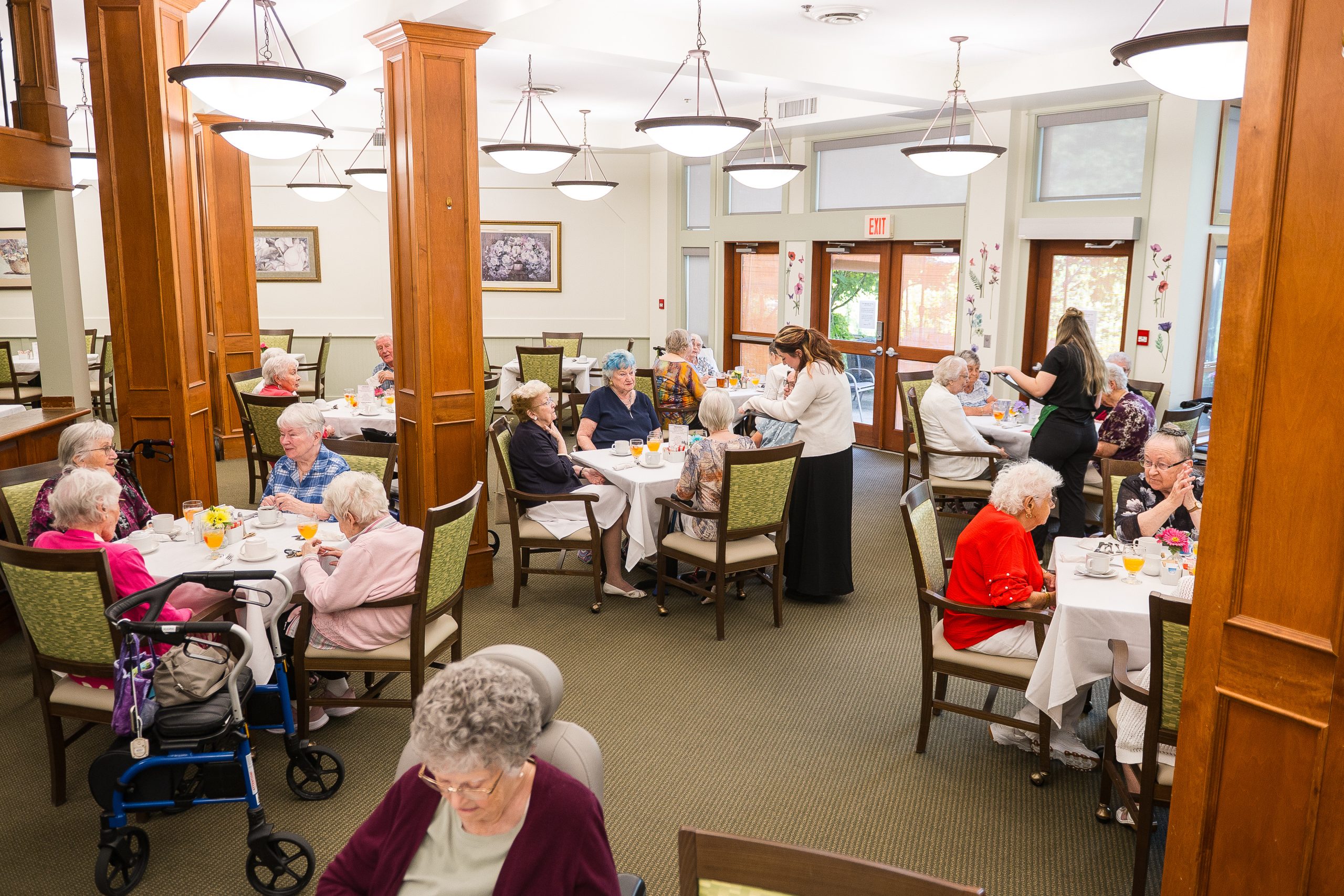
Most Park Place residences include a meal plan as part of the monthly rate across all care levels. Meals are prepared on-site and vary by location — we recommend checking with the specific community you are exploring for the most accurate picture.
Social calendars are also standard. From fitness classes and outings to seasonal events and quieter programming, most locations offer a full schedule each month. Monthly activity calendars can be downloaded directly from each location’s page on our website.
Are small pets allowed?
Yes, at most independent living residences. Visiting pets are also welcome at other care locations, provided they are leashed and have up-to-date vaccinations. Policies can vary, so it is worth confirming directly with the location you have in mind.
What if my loved one’s needs change after moving in?
This comes up in almost every family conversation, and it is worth taking a moment to address.
Many Park Place communities offer more than one level of care, or are near sister locations that do. As needs change over time, there are often options to bring in additional support without requiring a full move to a new facility. Every situation is different, and our teams are used to helping families think through what that pathway might look like.
Still have questions?
The process of choosing a senior living community rarely follows a straight line. Families often come back with new questions after a first tour, after a health change, or after sitting with the information for a while. That is all part of it.
If you want to learn more about a specific community, the easiest first step is often a tour or a conversation with the team on-site. You can find your nearest Park Place location on our Find a Location page. We are happy to start wherever you are in the process.